GCAT: Detecting and Summarizing GUI Changes in Evolving Mobile Apps
Team Members: Kevin Moran, Cody Watson, John Hoskins, George Purnell, & Denys Poshyvanyk
College of William & Mary --- SEMERU

Purpose
This project was created by the Software Engineering Maintenance and Evolution Research Unit (SEMERU) at the College of William & Mary, under the supervision of Dr. Denys Poshyvanyk. The major goal of the Gcat project is to help improve and automate the process summarizing the changes to a mobile application's graphical users interface as it evolves over time in order to improve program comprehension tasks.
Publications
Detecting and Summarzing GUI Changes in Evolving Mobile Apps
‣ Kevin Moran, Cody Watson, John Hoskins, George Purnell, and Denys Poshyvanyk
‣ Proceedings of the The 33rd IEEE/ACM International Conference on Automated Software Engineering (ASE'18), Montpellier, France, September 3rd-7th 2018, to appear, 12 pages (21% Acceptance Rate)
‣ [pdf]
Gcat is open source on GitLab!
We will be open sourcing the Gcat tool on GitLab. The project will be released in October 2018, but if you would like early access please email kpmoran@cs.wm.edu.
Click Here to Access Gcat on GitLab

Gcat
Gcat Workflow Overview
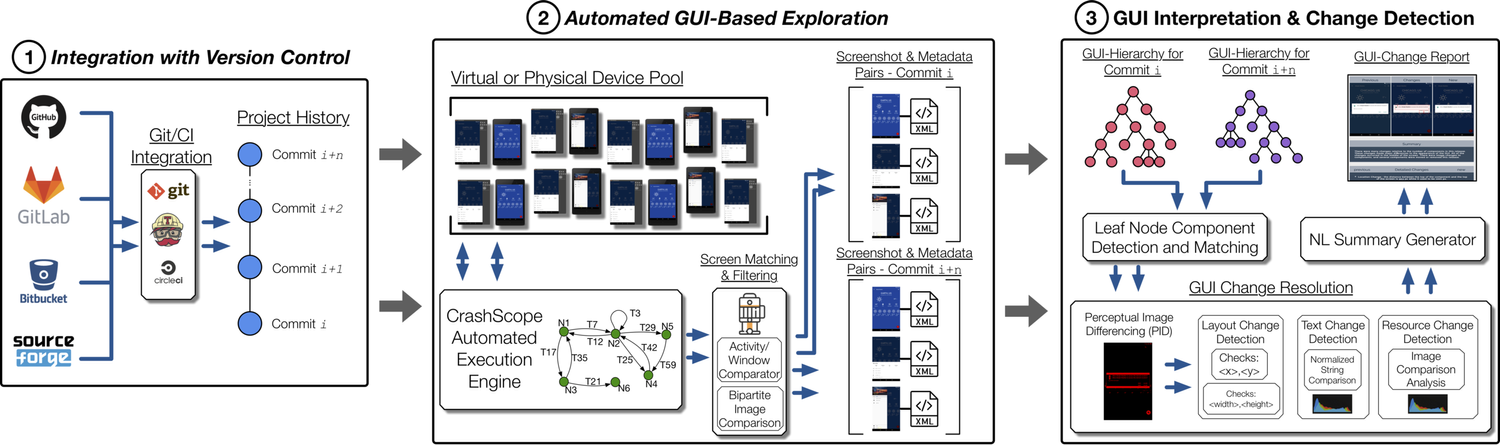
Figure 1: Gcat Workflow Overview (Click for more detail)
There are three main components of the Gcat approach depicted in Figure 1, (i) Version Control Integration, (ii) Automated GUI-Based Dynamic Analysis, and (iii) GUI Interpretation and Change Detection. Gcat is able to analyze subsequent commits from a software repository that utilizes a version control system such as Git, and automatically compiles and executes target commits. It then filters and matches screens discovered during automated exploration of a target app's GUI, and finally detects and reports changes related to GUI-components. Gcat was implemented for the Android platform and is written in Java. It was designed to allow for integration into Continuous Integration and version control systems to facilitate fully automated generation of documentation. In this section we describe each component of the Gcat approach.
Tools used for Gcat Implementation
We provide the tools we used in our implement GVT below:
Accessing the Gcat Open Source Project & Documentation
GCat is now open source on GitLab! Click on the button below to be taken to the GitLab repo.
GVT Study
Research Questions
RQ1: How well does Gcat's screen matching and filtering procedure function?
RQ2: How well does Gcat perform in terms of detecting and classifying GUI changes that occur during the evolution of mobile apps?
RQ3: Is Gcat able to more accurately detect and classify GUI changes in evolving mobile apps compared to manual efforts from developers?
RQ4: Do developers find Gcat reports useful for documenting and summarizing GUI changes in evolving mobile apps?
Study Subjects
The table below contains the Name, Versions, LoC, and the number of downloads (if listed on Google Play) of each app used in our evaluation of Gcat. Please click on an app in the table to go to its page in the FDroid Repository.
Gcat Reports for Empirical Evaluation
Reports for Empirical Study
REports for User Study
Study Results
Results for RQ1
Our first RQ investigates the performance of Gcat’s screen filtering and matching procedure. Running CrashScope through all 61 of our subject apks resulted in 3,854 total extracted screens, or ≈ 63 screens per apk. Gcat’s filtering procedure was able to reduce this set to a much more manageable 316 screens for the matching proce- dure. This results in an FS measurement of (3, 854 − 316/3, 2854) × 100 = 91.8%, meaning that over 90% of the collected screens were filtered out as redundant, drastically reducing the information bur- den on developers for reading GUI-change reports. These filtered screens resulted in 158 matched screen pairs, which exhibited aMatching Precision (MP) of 84.8%. This illustrates that Gcat is able to both effectively filter and match corresponding screen pairs that were automatically extracted from automated dynamic analysis of subsequent app versions.
Results for RQ2
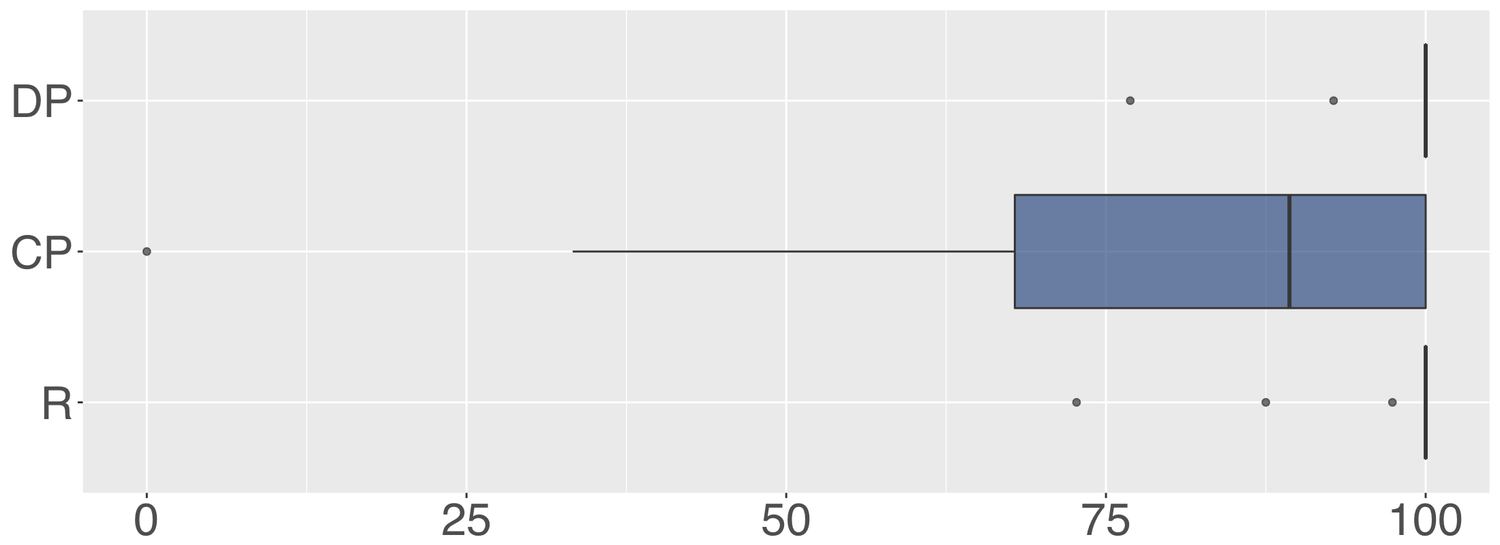
Detection Precision (DP), Classification Precision (CP), and Recall (R) of Gcat during typical use.
Results for RQ3
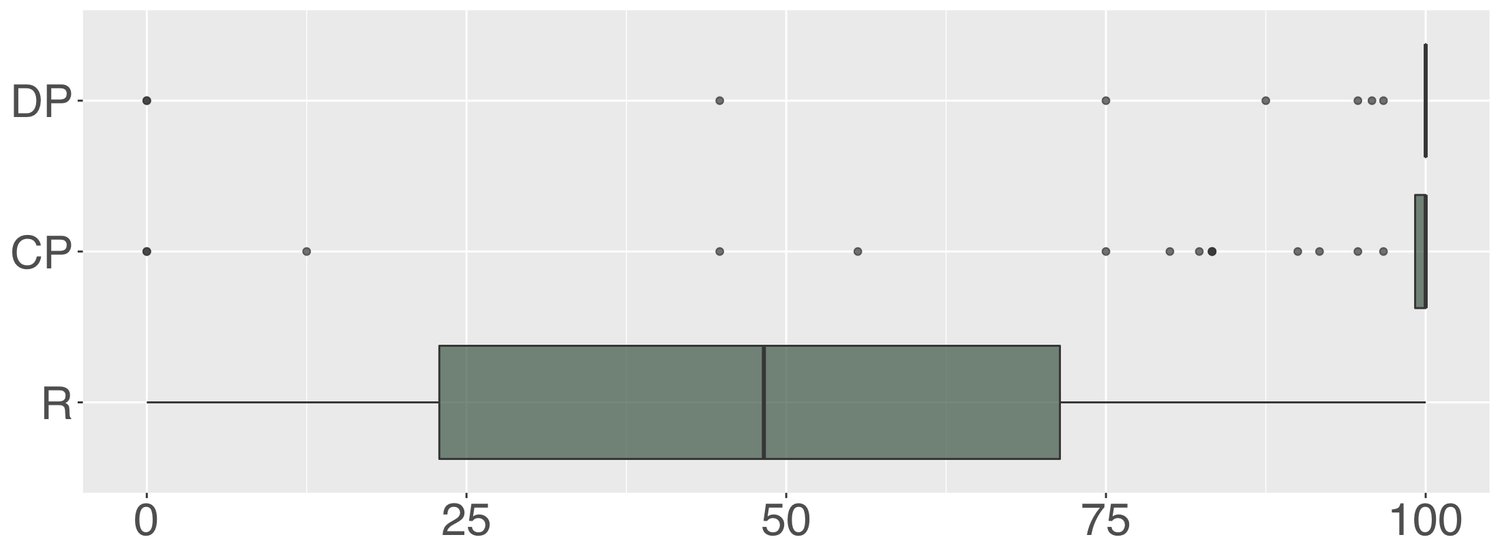
Detection Precision (DP), Classification Precision (CP), and Recall (R) of Humans.
Results for RQ4
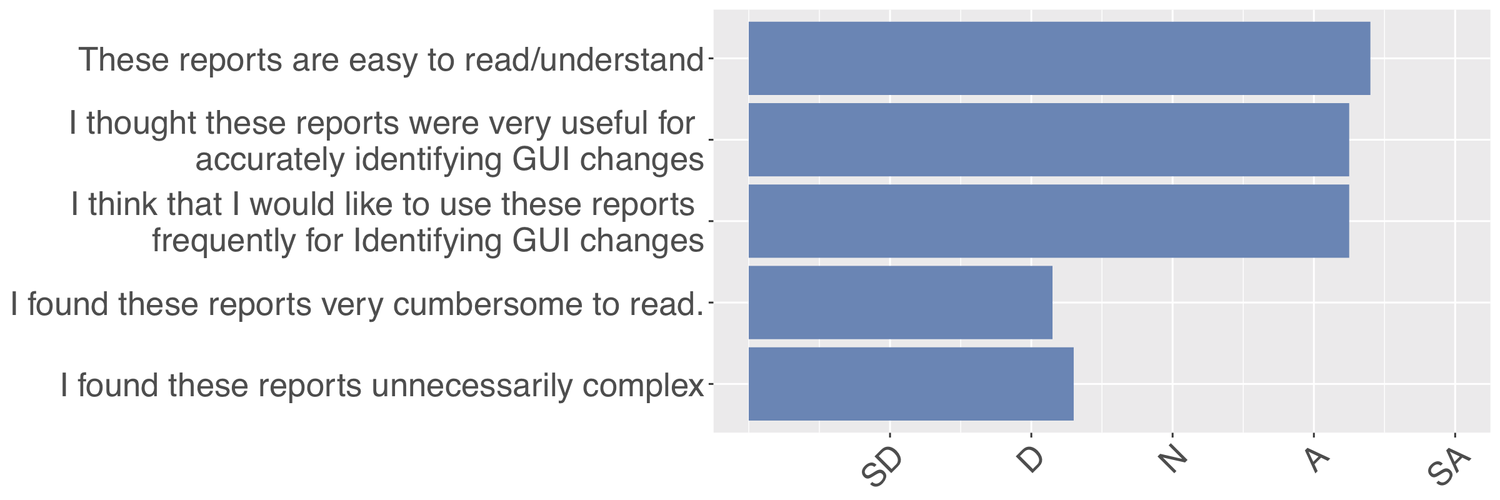
Participant Responses to the Likert-Based UX questions illustrating favorability for Gcat
Data and Replication Package
We have made our replication package for GCat available on GitLab. Please refer to the repo for detailed information regarding the included data.